
How to De-Escalate Conflict in Classrooms Without Losing Authority

Conflict in the classroom often starts with something small.
A comment that feels disrespectful. A student refusing a direction. A tone that shifts just enough to change the atmosphere in the room. What happens next determines whether the situation settles or escalates.

Early intervention helps de-escalate conflict in classrooms before situations intensify.
Teachers are often told to remain calm, but that advice alone is not enough. Calm without structure can feel passive. Authority without control can feel reactive. The challenge is to hold both at the same time: to de-escalate without giving up leadership.
Check Out: Restorative Practices for 2026
The first thing to understand is that escalation is rarely about the surface issue. When a student pushes back, they are often responding to something deeper—frustration, embarrassment, fatigue, or a need for control. Addressing only the visible behavior without acknowledging the underlying tension tends to make the situation worse.
That does not mean a teacher needs to analyze the student in real time. It means recognizing that the moment is not about compliance, it is about regulation.
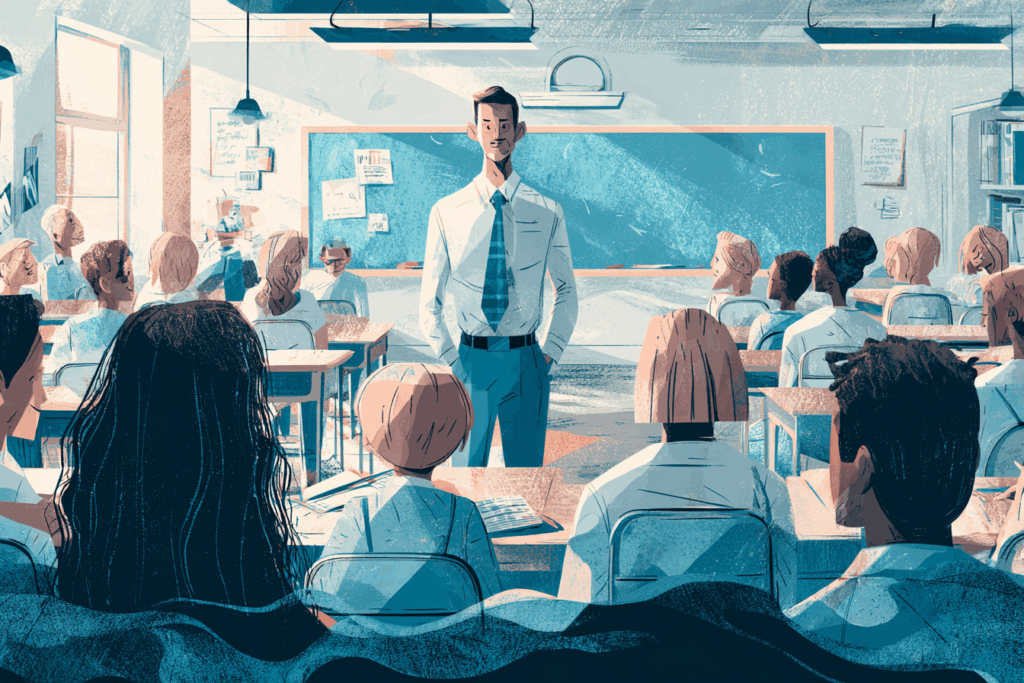
Strong classroom presence allows teachers to de-escalate conflict without losing authority.
When a student becomes confrontational, the instinct is often to respond immediately and firmly. There is a fear that hesitation will be interpreted as weakness. In reality, a brief pause can be one of the most powerful tools available. It creates space between the student’s reaction and the teacher’s response, which helps prevent the interaction from becoming a cycle of escalation.
The tone of the response matters as much as the content. Lowering volume rather than raising it shifts the dynamic. A quieter voice requires students to listen more closely, and it signals control without aggression. Statements delivered calmly carry more weight than those delivered with intensity.
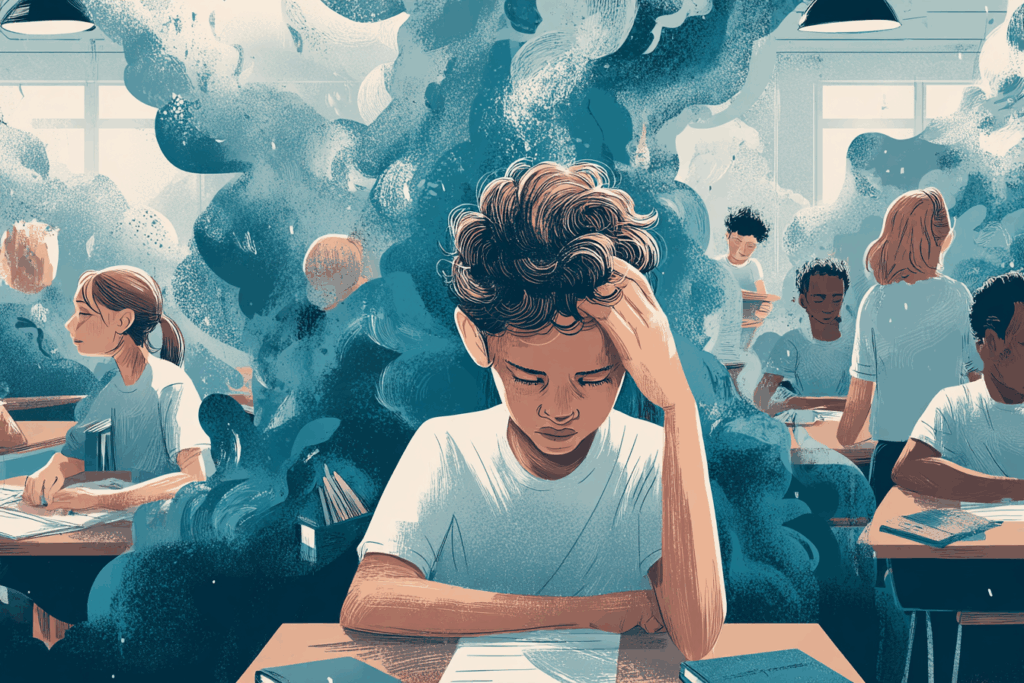
Understanding student stress is key to de-escalating conflict in classrooms effectively.
Language also plays a critical role. Direct commands in the middle of an escalation can feel like a challenge to the student, especially in front of peers. Reframing instructions can reduce resistance. Saying, “Let’s take a step outside for a second,” often works better than, “You need to leave now.” The meaning is similar, but the tone invites cooperation rather than forcing compliance.
Public interactions tend to escalate faster than private ones.
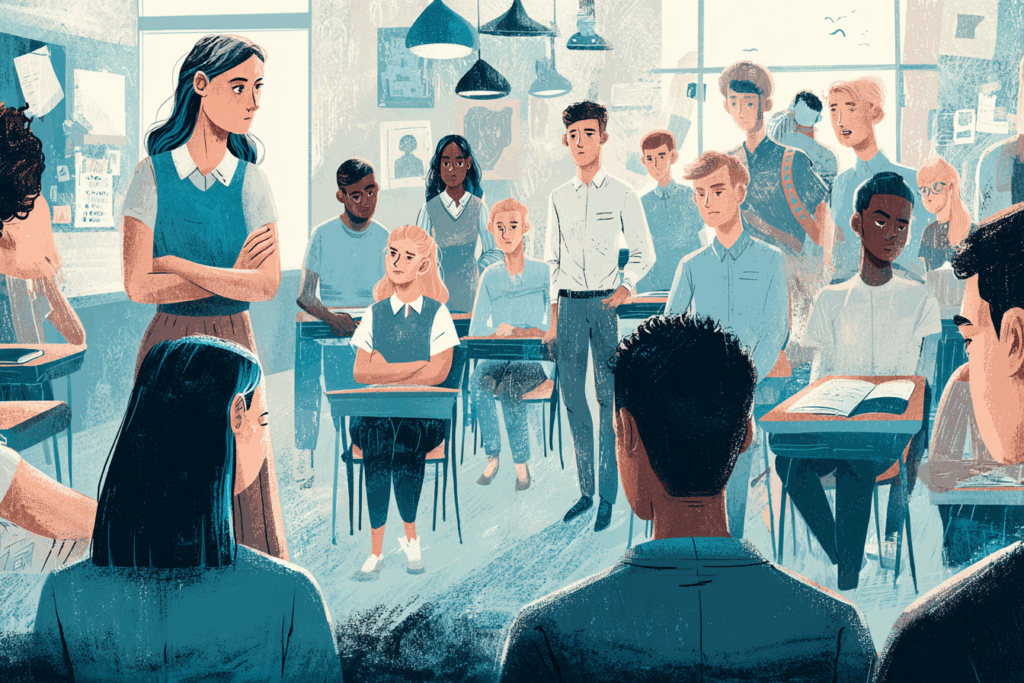
Group dynamics can influence how conflict escalates or is resolved in classrooms.
When possible, moving the conversation away from the audience changes the context and dynamic. Removing pressure to posture in front of classmates, talking with a student away from peers can initiate a calmer response. Even a brief shift to the side of the room can lower the intensity.
Check Out: Managing Conflict in Remote and Hybrid Schools
It is also important to avoid turning the moment into a debate. When a student argues, engaging in back-and-forth exchanges can quickly erode authority. Each response invites another, and the situation becomes about winning rather than resolving. Short, clear statements work better. “We’ll talk about this after class” closes the loop without feeding the conflict.
Maintaining authority does not mean controlling every outcome. It means controlling the structure of the interaction. A teacher who can set boundaries calmly communicates more authority than one who reacts emotionally, even if the reaction is intended to enforce rules.

Positive classroom environments make it easier to de-escalate conflict without losing authority.
Students are highly attuned to emotional shifts. They notice tension in voice, posture, and pacing. When a teacher remains steady, it creates a contrast that can help regulate the student’s behavior. This does not happen instantly, but it changes the trajectory of the interaction.
After the immediate moment has passed, follow-up matters. Ignoring the situation entirely can leave unresolved tension, while addressing it publicly can reignite conflict. A private conversation allows for clarity without pressure. It also reinforces that the goal is resolution, not punishment.
In that conversation, the focus should remain on behavior and expectations, not personal judgment. “Here’s what I need from you moving forward” is more effective than revisiting the entire incident. The goal is to reset the relationship so the next class period does not carry the same tension.

One-on-one conversations are powerful tools to de-escalate conflict in classrooms.
Consistency is what ultimately defines authority.
Students watch how teachers respond across multiple situations. If responses are unpredictable, students test boundaries more often. If responses are steady, even when firm, students begin to understand what to expect.
De-escalation is not about avoiding conflict. It is about managing it in a way that keeps the classroom intact. Authority is not lost when a teacher chooses calm over confrontation. It is strengthened.

Restorative conversations help de-escalate conflict in classrooms while maintaining authority and respect.
In a classroom where emotions can shift quickly, the ability to hold structure without escalating becomes one of the most important skills a teacher can develop. It allows learning to continue, relationships to remain intact, and the classroom to function as a place where both expectations and respect are clear.