
Workplace Violence in Healthcare: What the 2026 Numbers Mean for Behavioral Health Staff

A nurse in an emergency department is struck by a patient in active psychiatric crisis. She reports it. Her hospital logs it as workplace violence, one entry in a category that grew 158 percent in general hospitals between 2011 and 2022. That single incident sits inside a trend line regulators, hospital administrators, and behavioral health providers have spent 2026 trying to catch up to.
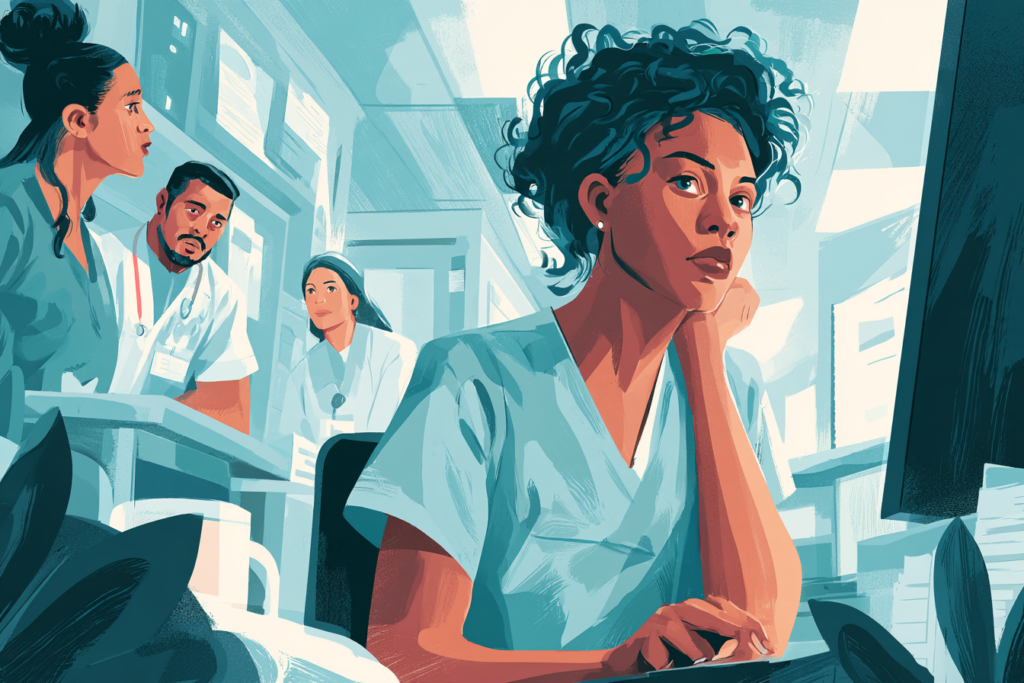
Workplace Violence Incidents in Emergency Departments
The numbers describe an industry absorbing a disproportionate share of national violence
Healthcare workers make up roughly 10 percent of the U.S. workforce and account for nearly half of all nonfatal injuries caused by workplace violence. The Bureau of Labor Statistics puts healthcare workers at five times the risk of workplace violence compared to other professions. Between 2018 and 2020, the nonfatal injury rate from intentional violence in private healthcare and social assistance settings climbed from 10.4 to 15.2 per 10,000 full-time workers, close to a 50 percent jump in two years. From 2011 through 2018, an estimated 156 healthcare workers were killed on the job, an average of twenty deaths a year.
Behavioral health settings sit at the sharper end of that trend. Patients in crisis, working with impaired judgment or acute psychiatric symptoms, generate a disproportionate share of the incidents driving the broader healthcare numbers. National Nurses United surveys put the share of nurses reporting at least one form of workplace violence in the past year above 80 percent.

Behavioral Health Staff Responding to Patients in Crisis
Among emergency physicians, the figure runs even higher. Most report either experiencing violence themselves or knowing a colleague who has, and a majority describe conditions as worse than the year before. Covert forms of violence complicate the count further. Intimidation, verbal threats, and harassment don’t always show up in a formal incident report the way a physical assault does, and staff working in psychiatric units or crisis stabilization settings describe those lower-grade incidents as near-constant background noise rather than isolated events worth logging.
Regulation hasn’t kept pace with any of it. OSHA first issued voluntary guidelines for preventing workplace violence in healthcare in 1996, updated them in 2004 and again in 2016. Labor unions, including National Nurses United, petitioned for a binding federal standard in 2017. As of 2026, none exists. OSHA’s proposed rule sits in “Long-Term Action” status on the agency’s regulatory agenda, meaning no federal standard is expected for at least another year, likely longer.

The Hidden Forms of Workplace Violence
The global picture backs up the domestic numbers. The World Health Organization estimates that up to 38 percent of healthcare workers experience physical violence at some point in their careers, a figure that has pushed the WHO to co-develop international guidelines for addressing violence in the health sector alongside partner organizations.
The framing in that guidance echoes what U.S. regulators and accreditors have started to formalize independently: prevention has to be built into staffing, environment, and training, not treated as a response protocol activated after the fact.

Building a Workplace Violence Prevention Program
States have moved into the vacuum
California is actively enforcing its Workplace Violence Prevention Plan mandate, requiring hospitals to maintain a documented program, log incidents, and train staff annually. Washington recently amended its state law to add formal investigation requirements after violent incidents in healthcare settings. The Joint Commission, which accredits most U.S. hospitals, has expanded its own definition of workplace violence beyond physical assault to include intimidation, harassment, and bullying, and it now cites facilities that lack a documented prevention program independent of what OSHA requires.

De-Escalation Training for Healthcare Staff
That enforcement gap between federal inaction and state or accreditation pressure is where training investment tends to land. A hospital that cannot produce a documented violence-prevention program, staff training records, and an incident investigation process is exposed to a Joint Commission citation even without a federal violation to point to. For behavioral health providers specifically, where the underlying clinical population carries elevated risk, that documentation burden is heavier still, and the case for prevention-first training is harder to defer.
Check Out: Restorative Practices for 2026
The financial case sits alongside the compliance case. Replacing a single registered nurse costs healthcare systems an average of just over $60,000, and violence exposure is a documented driver of the burnout and turnover behind that figure. Surveys of healthcare workers who experienced violence report elevated rates of anxiety, depression, and burnout, and a meaningful share leave the profession within a few years of a serious incident.
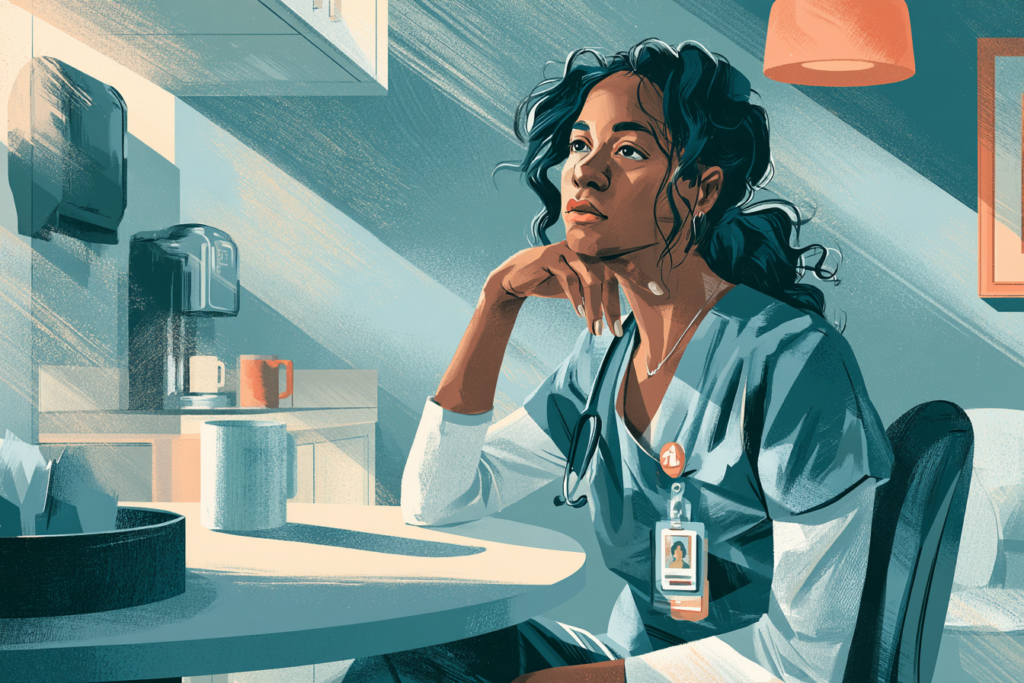
The Impact of Workplace Violence on Healthcare Staff
Staff retention data that tracks perceived safety alongside formal injury metrics tends to show a decline in safety scores predicting a rise in incident rates two to three reporting periods later, giving administrators a leading indicator worth tracking on its own, well ahead of the injury report that follows it.
None of this points to a single fix. Physical security measures, duress alert systems, and staffing levels all factor into a hospital’s exposure. But every framework circulating in 2026, California’s mandate, Washington’s amendment, the Joint Commission’s expanded definition, OSHA’s stalled federal rule, treats trained de-escalation as a baseline expectation, not an optional add-on. Staff who can recognize early signs of escalation and intervene verbally before a situation reaches physical crisis are the first line of a prevention program regulators and accreditors are now checking for by name, and increasingly citing facilities for lacking.
Check Out: Managing Conflict in Remote and Hybrid Schools
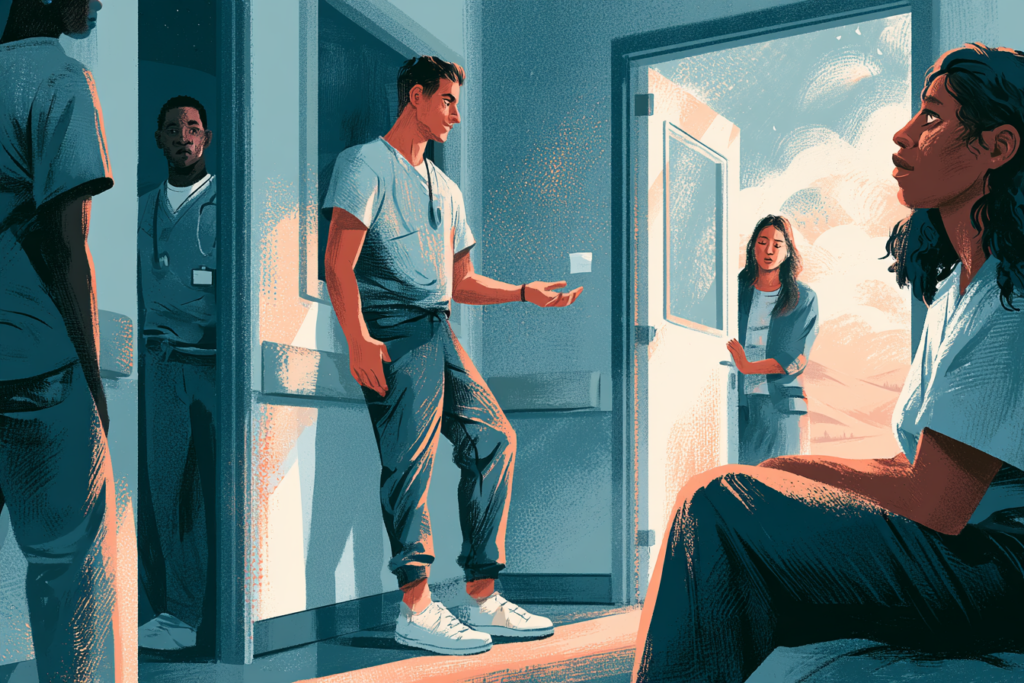
De-Escalation as the First Line of Prevention
Check Out: Managing Conflict in Remote and Hybrid Schools
For organizations training frontline healthcare and behavioral health staff, the message embedded in this year’s regulatory activity is specific. Documentation matters, but it documents something. A program that trains staff in recognizing dysregulation early, communicating through it, and de-escalating before intervention is required doesn’t just reduce the incidents that show up in next year’s injury rate. It’s the underlying practice every current and pending workplace violence regulation is written to formalize, and the standard hospitals and behavioral health organizations will be measured against long after any single mandate takes effect. The facilities investing in that training now are the ones that won’t be scrambling to retrofit a program once a citation or a headline forces the question.

Building a Prevention-First Healthcare Culture
Quick Answer
Healthcare workers face some of the highest workplace violence rates of any U.S. profession: they make up roughly 10 percent of the workforce but absorb nearly half of all nonfatal violence-related injuries, at a rate five times higher than other industries. That rate climbed from 10.4 to 15.2 per 10,000 full-time workers between 2018 and 2020, and general hospitals saw a 158 percent increase in violence-related injuries between 2011 and 2022. No federal OSHA standard exists to address it; the agency’s proposed rule sits in Long-Term Action status with no standard expected within at least a year. States and accreditors have stepped in instead, with California enforcing a Workplace Violence Prevention Plan mandate and the Joint Commission actively citing hospitals without documented prevention programs, both of which treat trained, prevention-first de-escalation as a baseline expectation for behavioral health and healthcare staff.
Frequently Asked Questions
1. Is there a federal OSHA standard for workplace violence in healthcare?
No. As of 2026, OSHA has no binding federal standard specifically governing workplace violence prevention in healthcare. The agency’s proposed rule has moved to Long-Term Action status on its regulatory agenda, meaning no standard is expected within at least the next twelve months.
2. How much has workplace violence in healthcare increased?
The nonfatal injury rate from intentional violence in private healthcare and social assistance settings rose from 10.4 to 15.2 per 10,000 full-time workers between 2018 and 2020. General hospitals recorded a 158 percent increase in violence-related injuries between 2011 and 2022.
3. What share of workplace violence injuries happen in healthcare?
Healthcare workers make up roughly 10 percent of the U.S. workforce but account for nearly half of all nonfatal injuries caused by workplace violence, and face a rate of workplace violence about five times higher than workers in other industries.
4. Which states regulate workplace violence prevention in healthcare?
California actively enforces a Workplace Violence Prevention Plan mandate requiring hospitals to maintain a documented program, log incidents, and provide annual training. Washington recently amended state law to add formal investigation requirements after violent incidents in healthcare settings.
5. How does the Joint Commission enforce workplace violence prevention?
The Joint Commission, which accredits most U.S. hospitals, has expanded its definition of workplace violence to include intimidation, harassment, and bullying alongside physical assault, and actively cites facilities that lack a documented prevention program, independent of federal OSHA requirements.
6. How does workplace violence affect healthcare staff retention?
Replacing a single registered nurse costs healthcare systems an average of just over $60,000. Surveys of healthcare workers who experienced violence report elevated rates of anxiety, depression, and burnout, and declining perceived-safety scores tend to predict a rise in formal incident rates two to three reporting periods later.
7. What role does staff training play in workplace violence prevention?
Every current framework, from California’s mandate to the Joint Commission’s expanded definition, treats trained de-escalation as a baseline expectation. Staff able to recognize early signs of escalation and intervene verbally before a situation becomes physical are considered the first line of a compliant prevention program.
Expert Summary
Workplace violence in healthcare has outpaced federal regulation. OSHA’s proposed standard remains years from enforcement, while healthcare workers continue to absorb a disproportionate share of national workplace violence injuries, with behavioral health and crisis-facing roles at the sharper end of that trend. In the resulting gap, states and accrediting bodies have become the active enforcers: California’s Workplace Violence Prevention Plan mandate, Washington’s amended investigation requirements, and the Joint Commission’s expanded definition of violence all now expect a documented, prevention-first program as standard practice. For hospitals and behavioral health organizations, trained staff who can recognize and de-escalate a crisis before it turns physical are the practical foundation every current and pending framework is built around, and the clearest hedge against both regulatory citation and the turnover costs violence exposure drives.
Sources: MedCity News; The Joint Commission)