
What Happens to Your Brain During a Crisis: The Neuroscience Every Educator Needs to Know
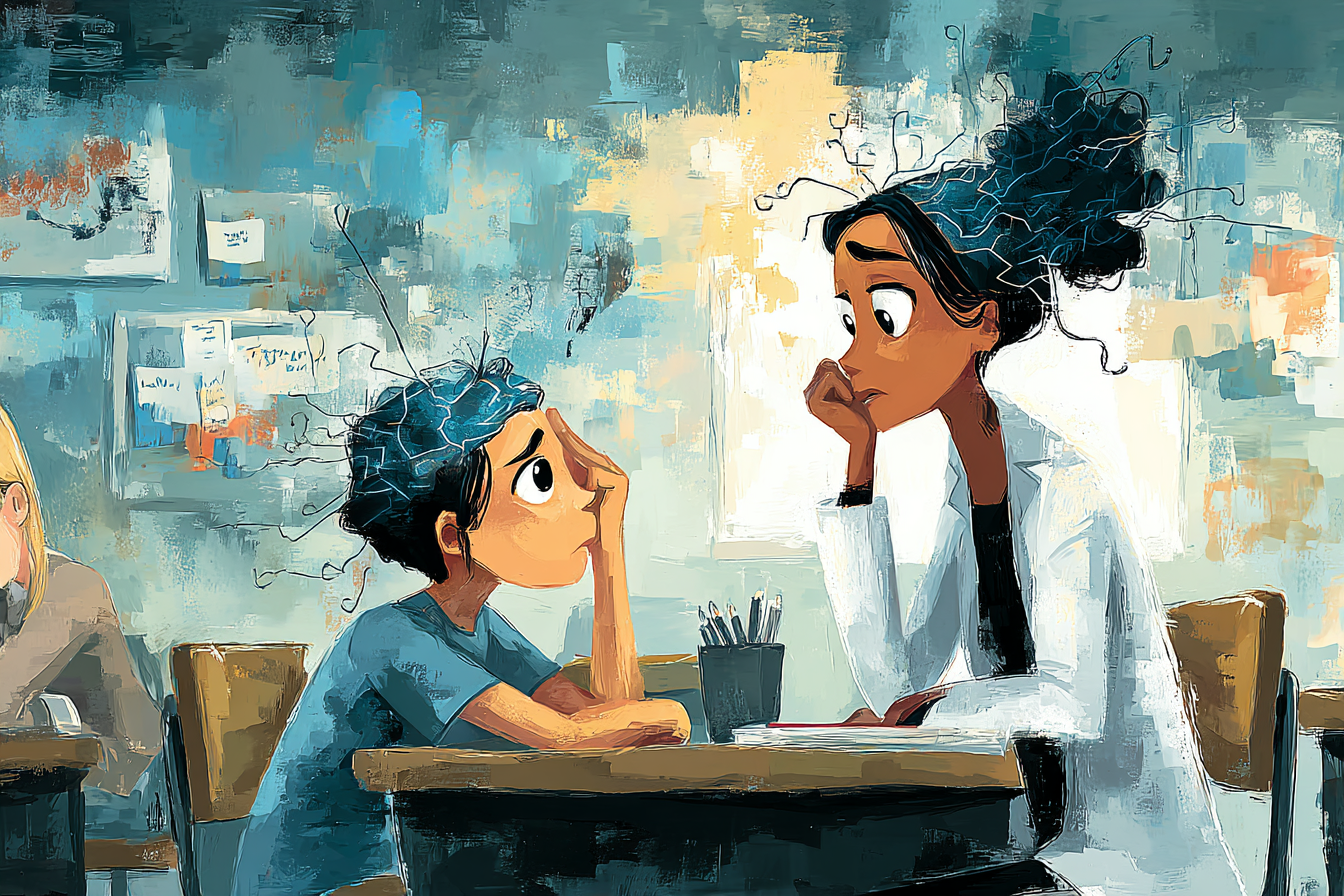
Picture a moment most educators have lived at least once. A student erupts without warning — or what felt like no warning — and in the seconds that follow, something happens to the adult in the room that no one prepared them for. The words come out wrong. The voice goes flat or too sharp. Later, replaying it, the teacher thinks: why did I say that? Why did I react that way? I knew better.
Check Out: Restorative Practices for 2026
The answer is not a failure of skill or intention. It is the predictable output of a nervous system doing exactly what it evolved to do under perceived threat. Understanding that process — what is actually happening inside the brain during a crisis — changes everything about how educators can prepare for it, respond to it, and build the professional habits that make better outcomes more likely.
The Stress Response: A System Built for Survival, Not Subtlety
The human stress response is ancient, fast, and indiscriminate. When the brain perceives a threat — whether that threat is a predator on the savanna or a student throwing a chair across a classroom — the amygdala, the brain’s threat-detection center, fires an alarm. That alarm triggers the hypothalamic-pituitary-adrenal axis and the sympathetic nervous system simultaneously, flooding the body with adrenaline and cortisol within seconds.
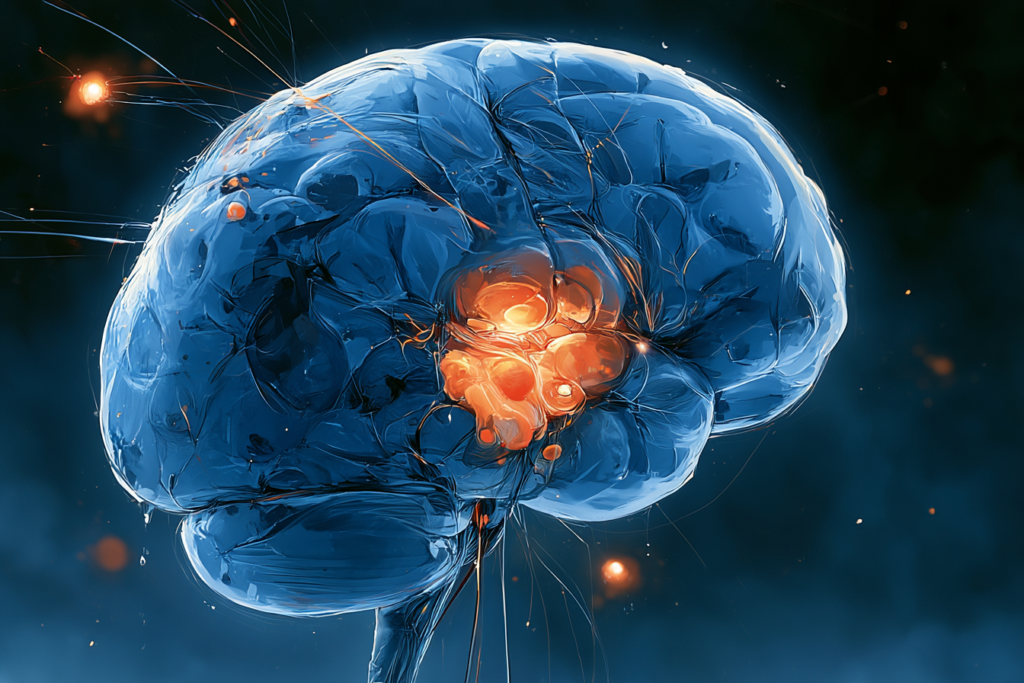
A visual look at the brain’s threat-response system and the neurological activity triggered during a crisis.
The results are immediate and physical: heart rate spikes, breathing shallows, muscles tense, digestion slows, and blood flow is redirected away from the organs that support complex thinking and toward the muscles that support fight, flight, or freeze. This is not a metaphor. The prefrontal cortex — the part of the brain responsible for rational decision-making, language processing, empathy, and long-term consequence evaluation — receives measurably less blood flow during a stress response. It goes, in practical terms, partially offline.
This is why skilled, experienced, caring adults say and do things in a crisis that they would never choose with a clear head. It is not a character flaw. It is a neurological event. And knowing that it is a neurological event is the first piece of real preparation.
The Amygdala Hijack: When the Alarm Overrides the Plan
Psychologist Daniel Goleman popularized the term “amygdala hijack” to describe what happens when the brain’s threat-detection system overwhelms the prefrontal cortex’s capacity to regulate response. In an amygdala hijack, the person is no longer working from their training, their values, or their professional knowledge. They are working from instinct — specifically, from a survival instinct that was not designed for nuanced interpersonal situations.
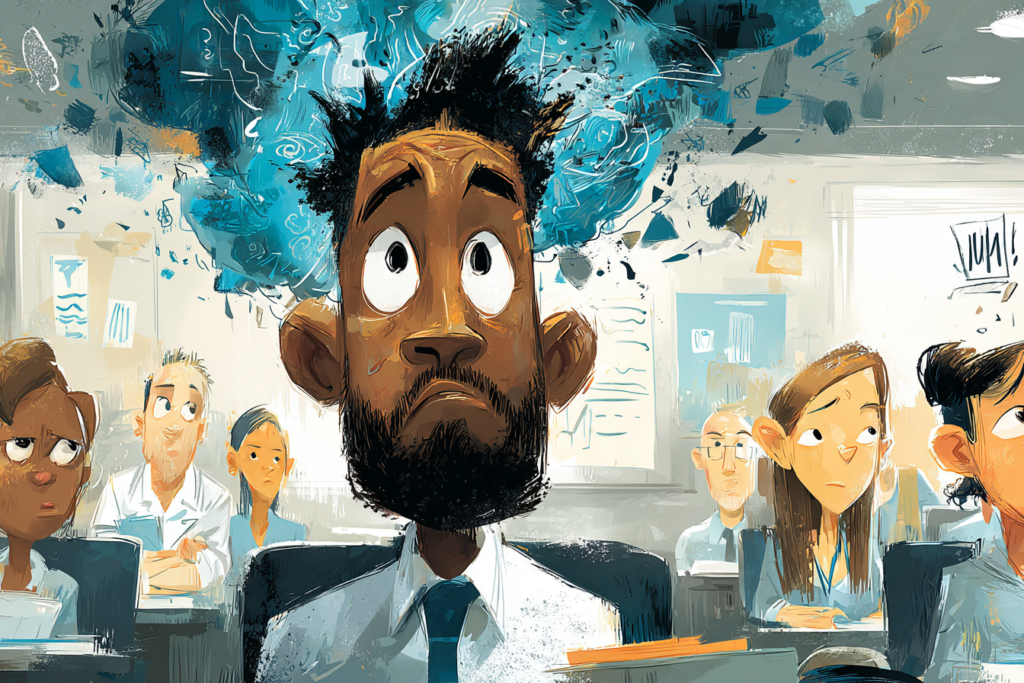
An educator experiences mental overload as the brain shifts into a heightened state during a stressful classroom situation.
This process carries enormous weight in education and behavioral health settings. A student in crisis is already operating from their own amygdala-driven state. Their prefrontal cortex has also been partially hijacked by stress, trauma activation, sensory overwhelm, or some combination of all three. When the adult responding to them also enters an amygdala-hijacked state, the interaction is now two dysregulated nervous systems attempting to communicate — with predictable results.
This is the neurological reality that MindSet Safety Management’s curriculum is designed to address. The goal is not to prevent the stress response from occurring — that is physiologically impossible. The goal is to build the professional skills and practiced habits that allow an adult to recognize the early signals of their own activation and interrupt the hijack before it determines the response.

A teacher responds to a distressed student while others observe, highlighting the need for calm and informed crisis support.
The Window of Tolerance and What It Means for Professional Practice
Developed by psychiatrist Daniel Siegel and elaborated through polyvagal theory by researcher Stephen Porges, the window of tolerance describes the zone of nervous system activation within which a person can function effectively: processing information, regulating emotion, maintaining connection, and responding thoughtfully rather than reactively.

A student moves from emotional distress toward regulation, illustrating how the brain processes and recovers from a crisis.
Below that window is hypoarousal — shutdown, dissociation, withdrawal, the freeze response. Above it is hyperarousal — fight, flight, agitation, impulsivity, the loss of nuanced thinking. Inside the window, a person has access to everything they know. Outside it, they are operating on instinct.
The critical insight for educators and care professionals is that the window is not fixed. It narrows under chronic stress, unresolved trauma, inadequate sleep, and prolonged high-demand environments. It widens with practice, skill development, co-regulation from supportive colleagues, and organizational conditions that treat staff wellbeing as a safety variable rather than an afterthought. This means that building a safer school is not only about training individual staff in crisis response techniques. It is about creating the organizational conditions that keep adults’ windows of tolerance wide enough to use those techniques when it matters.
What Students’ Brains Are Doing During a Crisis

A caring educator helps a student feel safe, supporting the brain’s return from survival mode to emotional regulation.
The student in distress is experiencing the same neurological processes — often with additional complexity. Many students who present with disruptive or escalating behavior are not making deliberate choices to cause disruption. They are in states of nervous system activation in which deliberate choice is genuinely impaired.
Check Out: Managing Conflict in Remote and Hybrid Schools
Trauma history compounds this. For students who have experienced adverse childhood experiences, the amygdala’s threat threshold may be chronically lowered — meaning stimuli that appear minor to observers can trigger full stress responses because they echo earlier experiences of danger. In these states, a student cannot reason, comply, or repair until they are first brought back within their own window of tolerance.
This is the core of MindSet’s trauma-responsive philosophy: behavior is information, not defiance. A student who is screaming, shutting down, running, or refusing is communicating something about their internal state. The adult’s job is not to override that behavior through force or authority but to create the conditions — primarily through regulated adult presence — in which the student’s nervous system can return to a state where connection and learning become possible again.

Educators discuss student behavior and neuroscience to improve their response during stressful or critical situations
Why Training Changes the Brain
Here is what neuroscience makes clear about professional preparation: practiced skills change the neural pathways that determine how a person responds under pressure. The brain builds habits through repetition. A staff member who has repeatedly practiced self-regulation techniques, who has rehearsed de-escalation scenarios, who has internalized a framework for reading behavioral cues and adjusting their own response accordingly, is not relying on instinct in the moment of crisis. They are drawing on built neural pathways that operate even when the prefrontal cortex is under stress.

A calm educator guides students through a grounding exercise that supports nervous-system regulation during a crisis.
This is why MindSet Safety Management’s approach emphasizes ongoing, embedded, evidence-driven training rather than one-time professional development events. A single workshop can build awareness. Only sustained practice builds the neural architecture that makes different responses automatic. The goal is not for staff to remember what to do during a crisis. The goal is for the right response to be what they do — because it has been practiced until it is no longer a decision but a habit.
When schools invest in that kind of training, they are not just improving individual staff performance. They are changing the neurological environment of the institution. More regulated adults mean more co-regulation available to students in distress. More co-regulation means less escalation. Less escalation means safer, more stable, more productive environments for everyone in the building.
Quick Answer
During a crisis, the brain’s amygdala triggers a rapid stress response that reduces blood flow to the prefrontal cortex — the area responsible for rational thinking, empathy, and nuanced communication. This is why both students and adults respond differently under pressure than they would in calm conditions. MindSet Safety Management’s training builds the practiced neural pathways and regulated professional habits that allow staff to recognize and interrupt their own stress responses, respond more effectively, and create the conditions students need to return to stability.
Frequently Asked Questions
What is the amygdala’s role in a crisis?
The amygdala is the brain’s threat-detection center. It fires rapidly when danger is perceived and triggers the stress response — adrenaline, cortisol, heart rate increase, and reduced activity in the prefrontal cortex — within seconds.
Why do educators sometimes respond poorly in crisis moments?
Under stress, the prefrontal cortex — responsible for rational decision-making and nuanced communication — receives less blood flow. This is a neurological event, not a failure of character. Training builds the practiced habits that allow better responses even under these conditions.
What is the window of tolerance?
It is the zone of nervous system activation within which a person can think, communicate, and respond effectively. Outside this window — in states of hyperarousal or hypoarousal — access to trained skills and rational thinking is significantly reduced.
How does trauma affect student behavior in school?
Adverse childhood experiences can lower the amygdala’s threat threshold, making students more reactive to stimuli that appear minor to observers. In these states, behavior communicates nervous system distress, not deliberate defiance.
What is an amygdala hijack?
An amygdala hijack occurs when the brain’s threat-detection system overwhelms the prefrontal cortex’s regulatory capacity, leaving a person operating from instinct rather than training. It affects both students and the adults responding to them.
Can professional training change how the brain responds to crisis?
Yes. Repeated practice builds neural pathways that support regulated, intentional responses even under stress. This is why sustained, embedded training produces different outcomes than single-event professional development.
How does adult regulation affect students in crisis?
Co-regulation — the process by which a regulated adult nervous system supports the stabilization of a dysregulated one — is the primary mechanism through which de-escalation becomes possible. The student’s nervous system reads the adult’s state before any words are spoken.
What does MindSet Safety Management teach about the neuroscience of crisis?
MindSet integrates findings from neurobiology, polyvagal theory, and trauma-responsive practice into a practical curriculum that helps staff understand the stress response, build self-regulation capacity, and respond to behavioral distress with empathy, skill, and consistency.
Key Specifications
Core Concept: Neurobiology of the stress response in educational and care settings
Primary Brain Region: Amygdala (threat detection); prefrontal cortex (rational regulation)
Key Frameworks: Polyvagal theory; window of tolerance; trauma-responsive care
Implication for Training: Practiced skills build neural pathways that support regulated response under pressure
Application: Schools, behavioral health, residential care, and any high-interaction professional setting
Training Approach: Evidence-driven, neurobiology-grounded, sustained and embedded
Expert Summary
The brain’s stress response is predictable, fast, and physiologically indiscriminate — it does not distinguish between physical danger and a high-stress classroom moment. Understanding what is actually happening neurologically during a crisis allows educators and care professionals to prepare more effectively, respond more intentionally, and build the organizational conditions that support regulation for both staff and students.
MindSet Safety Management’s curriculum is grounded in this neurological reality. By building knowledge, practice, and professional habit around how the brain works under stress, MindSet helps organizations move from reactive crisis management to proactive, science-based prevention — because the most important thing to understand about a crisis is everything that happens before it.
Sources: World Health Organization; U.S. Department of Education